

- Money20/20 Europe 2026: This Year Felt Different. - June 30, 2026
- Top Fintech SEO Agencies in 2026 | SEO, GEO & AI Visibility - June 26, 2026
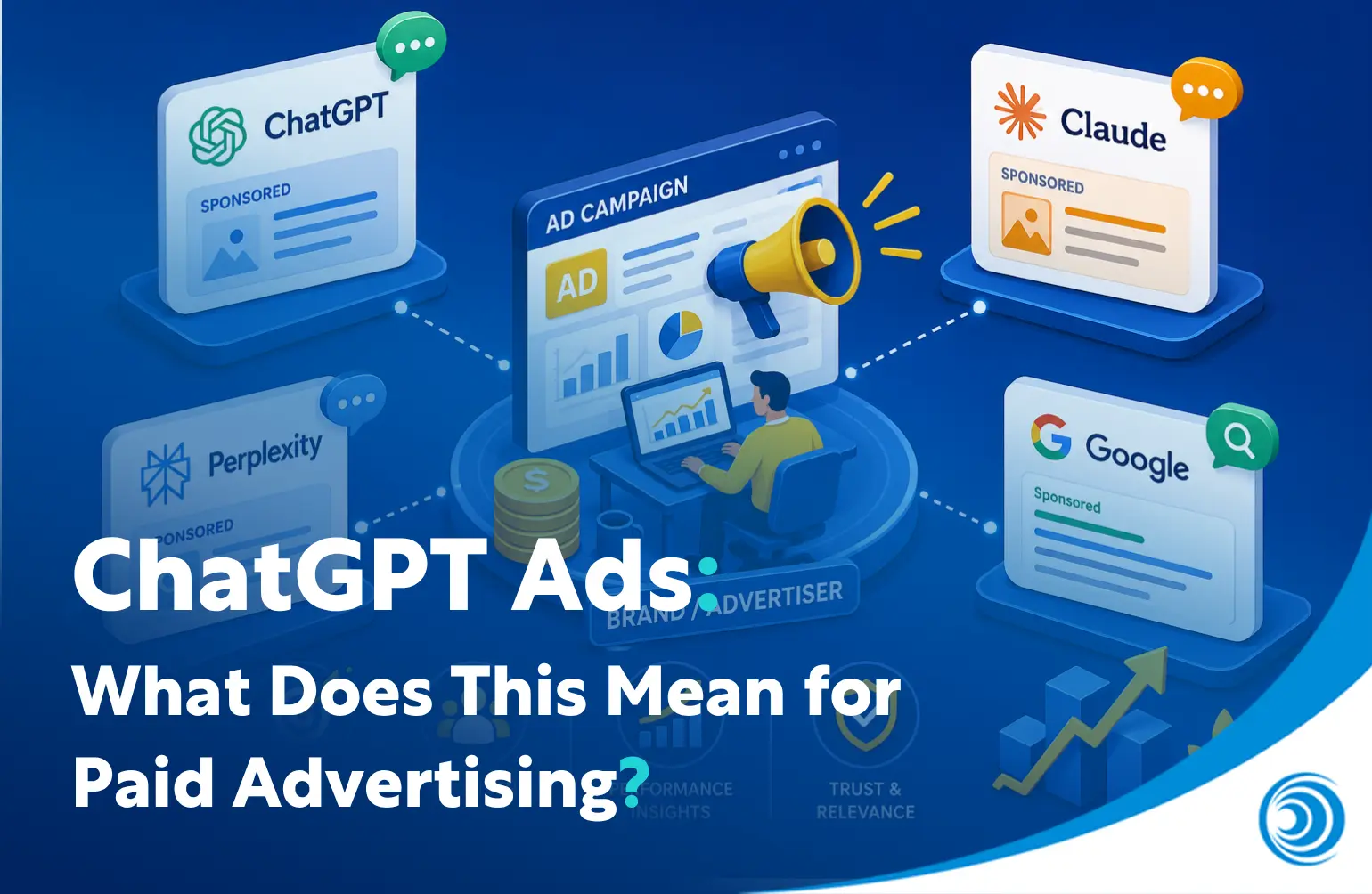
- ChatGPT Ads: What Does This Mean for Paid Advertising? - June 19, 2026
Digital advertising has spent the last two decades revolving around two dominant forces: search engines and social media platforms.
Now, for the first time, a major AI platform is entering the conversation.
OpenAI’s rollout of ChatGPT Ads marks a significant milestone, not just for the company but for the wider advertising industry. According to Sensor Tower data, more than 1,400 brands had tested ChatGPT ads in the US by late May 2026. During the initial managed beta phase, selected advertisers reportedly committed between $200,000 and $250,000, although OpenAI had since introduced a beta self-service Ads Manager that makes the platform accessible to businesses with smaller budgets.
It’s still early days, but one thing is becoming clear: AI-powered advertising is moving from theory to reality.
The question is, what does that mean for marketers?
Are ChatGPT Ads Already Gaining Momentum?
Although the rollout remains relatively limited, the pace of adoption has been difficult to ignore.
According to further third-party data from Sensor Tower, the number of ads being served through ChatGPT increased by approximately 600% during the first half of March. During the same period, the proportion of mobile users exposed to ads reportedly rose from around 1% to 5%.
Meanwhile, industry monitoring has identified more than 50,000 daily ad placements, suggesting that OpenAI is rapidly expanding its testing programme.
For a platform that only recently introduced advertising, those are significant early indicators.
How Do ChatGPT Ads Work?
OpenAI’s advertising model differs from traditional display advertising.
Rather than interrupting users with traditional banner ads or pop-ups, sponsored placements appear below relevant ChatGPT conversations.
Ads are clearly labelled and visually separated from the organic answer. OpenAI states that ads are selected through a separate advertising system and cannot influence, rank, or alter the answers ChatGPT provides.
The emphasis appears to be on relevance rather than interruption.
That’s important because conversational AI operates very differently from traditional websites, search engines, and social platforms. Users engage with ChatGPT expecting direct answers, helpful guidance, and personalised responses. Any advertising experience that feels forced or intrusive risks undermining the trust that has helped fuel the platform’s growth.
As a result, OpenAI faces a delicate balance between monetisation and user experience.
Advertisers, meanwhile, can potentially reach people based on the context and intent of a conversation. However, OpenAI states that individual conversations and personal details are not shared with advertisers.
ChatGPT vs Google Ads: What’s The Difference?
The obvious comparison is Google Ads. After all, both platforms connect businesses with users actively seeking information.
However, the experience is fundamentally different. Google presents options. ChatGPT provides answers.
When someone searches for a product, service, or solution on Google, they are typically presented with a page of sponsored listings, organic search results, videos, maps, and, more recently, AI-generated summaries. The users decide which path to follow.
Within ChatGPT, the interaction is far more conversational. A user might ask a series of questions, refine their requirements, compare options, and request recommendations before ever being exposed to a sponsored placement. Rather than targeting a single keyword, advertisers can potentially engage users based on the broader context of an ongoing discussion.
This could create richer opportunities for engagement, but it also requires marketers to adapt their approach to measurement, attribution, and transparency. OpenAI has already introduced CPC (Cost Per Click) and CPM (Cost Per Mille) buying, pixel-based measurement, and a Conversions API, although the platform’s performance benchmarks remain relatively immature.
For now, ChatGPT Ads appear less like a direct competitor to Google Ads and more like the beginning of an entirely new advertising category.
How Are ChatGPT Ads Different From Claude, Gemini & Perplexity?
Perhaps the most fascinating aspect of OpenAI’s decision is how different it is from the rest of the AI market.
While ChatGPT has embraced advertising, many of its competitors have not. That makes OpenAI’s move particularly significant.
Here’s a quick snapshot of where competitors stand:
- Anthropic’s Claude remains ad-free.
- Perplexity tested sponsored placements from 2024, but abandoned its advertising programme in early 2026, due to concerns about user trust. It shifted and focused on subscriptions and enterprise services.
- Google has publicly stated that it has “no immediate plans” to introduce advertising directly into the Gemini app. Although it has not ruled this out longer term. Google already includes advertising within Gemini-powered search experiences, including AI Overviews and AI Mode.
For years, AI companies have positioned their products as assistants, productivity tools, and information sources. Advertising introduces an entirely new commercial dimension to that relationship.
As the largest standalone conversational AI platform to develop advertising at this scale, OpenAI is effectively testing whether users are receptive to sponsored content within conversational experiences.
If advertisers see strong performance and users remain engaged, competitors may eventually follow suit. If users reject the experience, however, ad-free platforms could use that distinction as a competitive advantage.
Either way, OpenAI has become the industry’s testing ground.
Why Advertisers Are Paying Attention
The appeal is fairly straightforward.
Consumer behaviour is changing. More people are turning to AI platforms to research products, compare services, answer questions, and solve problems. In many cases, those journeys would have previously started with a Google search.
In fact, an analysis by Ahrefs estimated that ChatGPT’s search-like prompt volume was equivalent to approximately 12% of Google’s search volume. This does not mean that 12% of Google searches have migrated to ChatGPT, but it illustrates the growing scale of AI-led information discovery.
Advertisers naturally want to be present wherever those conversations are happening.
What’s particularly interesting about ChatGPT is that users often arrive with a high degree of intent. They’re not passively scrolling through content or browsing social feeds. They’re actively seeking information.
This is reflected in wider market trends too. Research by OpenAI and Harvard and Duke Universities, which analysed 1.5 million ChatGPT conversations, found that 24% qualified as ‘pure search’ activity, such as looking for facts, products, or recipes, while 51.6% fell into ‘asking intent’ queries, where users were seeking advice, perspective, or information to help inform a decision.
That creates an environment that shares characteristics with search advertising while offering a more personalised and conversational experience.
For brands, the opportunity is reaching users at the exact moment they’re actively seeking information, recommendations, and guidance.
What Does This Mean for Social Media Advertising?
While much of the discussion focuses on Google, the longer-term impact on social media may prove equally significant.
Platforms such as LinkedIn, Facebook, Instagram, and TikTok have traditionally excelled at creating demand. Users discover products, services, and brands they weren’t necessarily searching for.
ChatGPT occupies a different position. Users arrive with intent, but not always with a preferred solution. That places conversational AI somewhere between search and social.
Marketing teams may eventually find themselves allocating budget across three distinct channels:
- Search, for capturing existing demand.
- Social, for generating demand.
- AI, for influencing decisions through conversational discovery.
Whether this happens quickly or gradually remains to be seen. However, the emergence of ChatGPT Ads suggests AI may soon become a recognised media channel in its own right.
The Bigger Shift Isn’t Advertising
While the headlines focus on sponsored placements, the more significant story may be happening outside of them.
The rise of ChatGPT is changing how people discover information. For years, businesses focused heavily on ranking in search engines. Increasingly, brands are asking a new question: how do we appear in AI-generated answers?
This is where discussions around AI Visibility, Large Language Model Optimisation (LLMO), and Answer Engine Optimisation (AEO) come into play.
Visibility is no longer just about ranking highly in search results. It’s about ensuring your brand is recognised, understood, and surfaced when AI tools generate responses.
Whether a business invests in ChatGPT Ads or not, the challenge remains the same. Brands need to ensure they are discoverable wherever customers choose to search, ask questions, and explore solutions.
Advertising may become one route to visibility alongside AI-powered conversations. Organic visibility firmly remains another.
The brands that succeed over the next few years are unlikely to think in terms of search versus social versus AI. Instead, they’ll focus on building visibility across all three.
Final Thoughts
ChatGPT Ads may still be in their infancy, but their arrival signals something bigger than the launch of a new advertising platform.
As AI increasingly becomes a ‘go-to’ channel for discovering information, comparing options, and making decisions, brands will need to think carefully about how they show up in these environments – both through paid placements and organic visibility.
Exactly how AI advertising evolves over the coming years is difficult to predict. What’s already clear, however, is that AI is becoming a new frontier for marketers.
Want to understand how visible your brand is across AI platforms? Explore our AI Visibility services or get in touch with the Blue Train Marketing team to discuss how your business can strengthen its presence in AI and LLM search results.