

- Messaging Strategy for Fintech Product Rollouts - October 28, 2026
- Common Fintech Marketing Challenges & How to Overcome Them - October 28, 2026
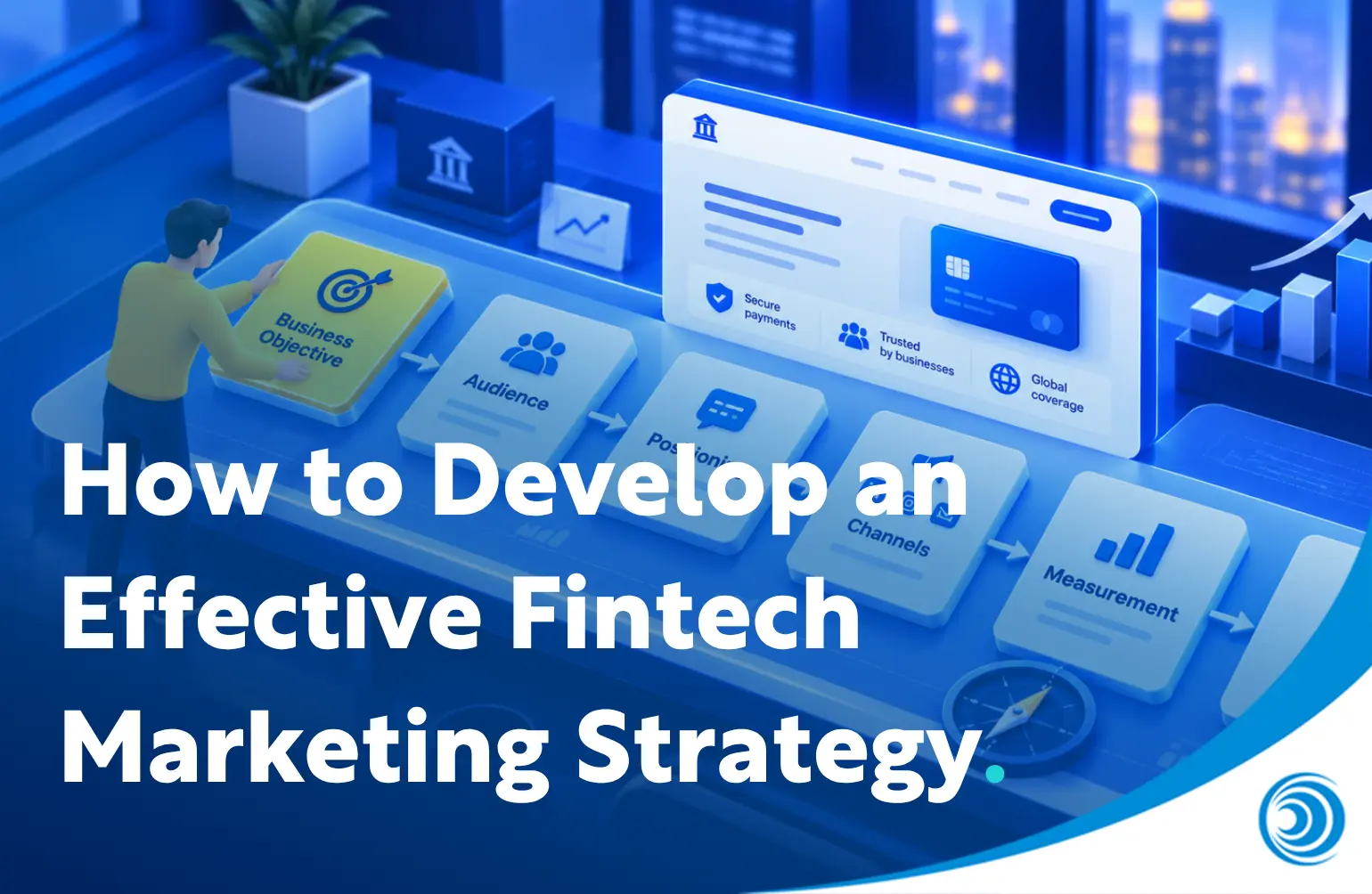
- How to Develop an Effective Fintech Marketing Strategy - October 28, 2026
The fintech industry is fast-moving, and there’s no shortage of businesses trying to get noticed. New products launch, competitors appear, customer expectations shift, and new channels emerge. For fintech companies, keeping up with all that activity can easily become a marketing strategy in itself. It shouldn’t.
A strong fintech marketing strategy is a plan to reach the right customers, communicate your value, and support commercial growth. It defines who you’re trying to reach, what you want them to understand about your business, where you need to show up, and how marketing should contribute to wider commercial goals.
For financial technology companies, there’s regulation to navigate, crowded markets to compete in, and sophisticated buyers to reach.
The right strategy brings these considerations together, connecting positioning and messaging with content, SEO, AI search, digital PR, social media, paid media, lead generation, and measurement.
This guide looks at how to develop an effective fintech marketing strategy from the ground up and ways to ensure your marketing activity is pulling in the same direction.
Start With Clear Business & Marketing Objectives
Before choosing which channels to use or what content to create, get clear on what the business needs marketing to achieve.
That could mean entering a new target market, acquiring new customers, generating qualified leads for a particular product, supporting a launch, building awareness, or increasing customer retention. The objective will shape the strategy that follows.
For example, a B2B digital payments business targeting enterprise buyers may need to support a much longer and more considered buying journey than a consumer fintech promoting a new financial product.
Once the business objective is clear, turn it into specific marketing goals and decide how to measure success. This means looking beyond activity metrics such as website traffic, social followers, or content output. Depending on the objective, more meaningful measures might include qualified leads, conversion rates, customer acquisition cost (CAC), customer lifetime value (LTV), activation, or retention.
The important thing is to create a clear connection between what the business wants to achieve, what marketing needs to do, and how you’ll know it’s working. Without that connection, it’s easy to end up with lots of disconnected marketing efforts and very little strategic direction.
Define Your Target Audience Segments
“Fintech customers” isn’t an audience. It’s a broad category of people with completely different needs, motivations, and reasons for choosing a financial product.
Start by getting specific about who you actually want to reach. For a B2B fintech, that might mean looking at company size, sector, market, job title, and buying role. For consumer fintechs, demographics, financial behaviours, needs, and levels of financial confidence may be more relevant.
The more clearly you understand your audience segments, the easier it is to shape relevant messaging, content, and marketing channels around them.
Understanding these differences helps you prioritise the customers your product is best placed to serve and tailor your messaging to their needs.
First-party data can help build this picture, alongside sales insight, customer research, existing customer feedback, and competitor analysis. Look at the questions customers ask, the problem they are trying to solve, and what ultimately influences their decisions.
Understand the Fintech Buying Journey
Fintech buying journeys rarely follow a neat path from seeing an advert to filling in a form. Prospects may discover fintech brands through search, read several articles, compare providers, speak to colleagues, check reviews, and spend weeks researching before they ever contact a sales team.
In fact, in 6sense’s 2025 B2B Buyer Experience Report, the average buying journey takes 10.1 months. Although this research isn’t fintech-specific, it illustrates why B2B marketing needs to support extended evaluation and decision-making.
That’s particularly important in B2B fintech, where decisions can involve procurement, compliance, finance, IT, and senior stakeholders.
Take a business looking for a new payments provider. Its journey might look something like this:
- Problem: Payment performance or costs have become an issue.
- Research: The team searches for potential solutions and compares providers.
- Evaluation: They explore product information, pricing, security credentials, and customer evidence.
- Consideration: Several stakeholders get involved, and the shortlist is narrowed.
- Decision: The business chooses a provider and begins onboarding.
Each stage creates different marketing opportunities. An educational article might help at the research stage, while a detailed product page, case study, or security information could be more useful during evaluation.
Mapping the journey helps fintech marketers create the right content and touchpoints at the right time, rather than expecting one fintech marketing campaign, marketing tactic, or channel to do all the work.
Develop Clear Fintech Positioning
Once you know who you’re trying to reach and how they make decisions, you need to be clear about why they should choose you.
Fintech markets can be crowded, with multiple businesses offering broadly similar products or solving the same problem. Strong positioning gives your business a clear place in that market and makes it easier for your target audience to understand what sets you apart.
Start with the fundamentals: what problem do you solve, who do you solve it for, and what makes your approach different? The answers should go beyond product features.
A payment platform might offer similar functionality to its competitors, for example, but differentiate through its approach to onboarding, specialist expertise, geographic coverage, or customer support.
Your positioning should then provide foundations for your value proposition, messaging, and content. It should be clear enough that your marketing team, sales team, and wider business can communicate the same core story across multiple channels.
Build Trust Into Your Fintech Marketing Strategy
Trust is fundamental to fintech marketing. Customers are being asked to hand over their money, financial data, personal information, or access to their financial lives, so credibility has to be built into the experience from the first interaction.
In research reported by IBS Intelligence in August 2024, 1 in 5 UK consumers said they distrusted the technology used, showing that fintech businesses have to communicate security, reliability, and transparency as clearly as they communicate their product benefits.
Your marketing should give potential customers tangible reasons to feel confident. Clear information about security and compliance, transparent pricing, credible customer evidence, and straightforward explanations of how the product works can all help build trust and reduce uncertainty.
Trust also needs to carry through the customer journey. A polished advert followed by a confusing landing page, unclear pricing, or a lengthy onboarding process can quickly undermine the confidence marketing has worked to build.
Create a Fintech Content Strategy
Content marketing should have a clear job within your fintech marketing strategy. That might be helping a prospect understand a complex product, answering a question they are actively researching, or giving sales teams something useful to share during a buying conversation.
Strong content marketing strategies are built around your audience and the buying journey rather than producing content simply to keep the publishing calendar moving. For fintech businesses, that usually means balancing product-focused content with genuinely valuable content and information that supports commercial conversations.
Core Product & Commercial Content
Your website needs to make it easy for potential customers to understand what you offer, who it is for, and why it is worth considering.
Product pages, landing pages, solution pages, case studies, and customer stories should communicate benefits clearly without hiding important detail behind marketing language.
This is particularly important for complex financial technology products. A prospect should not have to decode your website to work out whether your solution is relevant to them.
Educational Content
Fintech customers need to understand a problem before they are ready to consider a solution. Valuable educational content can help answer those early questions while demonstrating genuine expertise.
Guides, explainers, research, FAQs, and financial literacy content can make complex financial topics easier to understand and help establish authority. They can also support SEO by addressing the questions potential customers are already searching for.
Sales Enablement Content
Marketing content should also make life easier for sales teams. Case studies, comparison guides, product explainers, FAQs, objection-handling content, and tailored presentations can help sales teams answer questions and move prospects through the buying process.
Bringing marketing and sales into the content marketing strategy also reduces duplication. Instead of marketing creating content in isolation, both teams can identify the questions, objections, and information gaps that are actually affecting deals.
Develop an SEO & AI Search Strategy
Fintech marketers now need to think beyond traditional search engine results.
AI-generated answers and zero-click search results are changing how people find information. Bain reported in 2025 that around 60% of searches ended without users progressing to another destination, reinforcing the importance of visibility beyond website visits alone.
That changes what it means to be visible. Your website still needs strong technical SEO, relevant content, and clear information architecture, but your brand also needs to appear in the sources and content AI systems use to answer questions.
For Google’s AI search features, established SEO fundamentals remain relevant; there is no separate optimisation method that guarantees inclusion.
Start by identifying the questions your target audience is asking across the buying journey. This might include broad educational searches, product comparisons, regulatory questions, or specific problems your solution addresses. Build useful, authoritative content around those topics rather than simply targeting individual keywords.
For fintech companies, this also means strengthening the signals that support credibility: clear expertise, accurate information, third-party coverage, customer evidence, and consistent brand information across the web.
SEO and AI search should therefore sit within the wider fintech marketing strategy, working alongside content, digital PR, brand activity and other marketing efforts to make your business easier to discover, understand, and trust.
Use Digital PR to Build Authority & Awareness
For fintech companies, credibility often extends beyond what you say about yourself. Third-party recognition, expert commentary, and coverage in relevant publications can help build credibility and give your brand authority that owned marketing channels cannot create on their own.
Digital PR should therefore be part of the wider fintech marketing strategy. Look for stories your target audience will actually care about. Original research, market trends, industry insights, customer results, expert commentary, and genuine business developments can all create opportunities for relevant coverage and backlinks.
There are also strong connections between digital PR, SEO, and AI search. Muck Rack’s May 2026 research classified 84% of the AI citations in its sample as earned media, including third-party sources beyond journalism. Although citation patterns vary by platform and question, relevant third-party coverage can help fintech brands appear in the sources AI systems reference. It also gives potential customers more evidence to consider when they research your brand.
The aim isn’t simply to generate a spike in mentions. A good digital PR strategy builds recognition, authority, and trust over time, supporting the other channels working to bring prospects into the business.
Build a Distinctive Social Media Presence
Social media marketing gives fintech brands a chance to show the people, expertise, and perspective behind the product. But a strong presence needs more than a steady stream of company updates.
Start by deciding what you want your social channels to contribute to the wider marketing strategy. For some fintechs, that might mean building brand awareness and reaching new audiences. For others, it may be about demonstrating expertise, supporting recruitment, or creating meaningful conversations with existing customers and industry peers.
The marketing content should reflect the audience and the platform. Thought leadership, customer success stories, educational content, research, and commentary on relevant industry developments can all have a role, provided there is a clear reason for sharing them.
Most importantly, give people something worth following. A fintech brand that simply republishes product announcements is unlikely to create much customer engagement. A distinctive point of view, useful expertise, and a recognisable voice give audiences a reason to keep paying attention.
Use Paid Media Strategically
Paid media can put a fintech business in front of the right audience quickly, but spending money on visibility doesn’t automatically make it effective. The role of paid advertising should be clear within the wider marketing strategy.
Start with the audience, objective, and buying stage. Search campaigns can capture existing demand from people actively looking for a solution, while targeted campaigns across platforms such as LinkedIn can help reach specific B2B audiences or introduce a proposition to potential customers earlier in the buying journey.
The landing experience matters just as much as the advert. If someone clicks through to a page that doesn’t match the message, explain the proposition clearly, or provide enough information to build trust, the opportunity can quickly be lost.
Paid media should also be measured against meaningful commercial outcomes rather than clicks and impressions alone. Lead quality, conversion rates, customer acquisition costs, and eventual revenue give a much clearer picture of whether a fintech marketing campaign is contributing to growth.
Use Email to Nurture Fintech Prospects
Fintech buying journeys often take months; not every prospect will be ready to speak to sales the first time they encounter your brand. Email still has some power in keeping your business relevant while potential customers research and evaluate their options.
The key is to make those communications useful. Educational content, relevant insights, product information, and customer evidence can help prospects move through the buying journey without every email becoming a sales pitch.
Segmentation matters here too. A new lead exploring a problem for the first time should not necessarily receive the same content as an existing prospect comparing solutions. Use what you know about their interests, behaviour, and stage in the journey to make communications more relevant.
Email can also support existing customers, helping with onboarding, product education, cross-selling, and retention. As part of an integrated fintech marketing strategy, it helps develop customer relationships over time, rather than simply another channel for sending campaigns.
Make Events Part of the Wider Strategy
Events can be valuable in fintech, but attending every industry event isn’t exactly a strategy.
Start with what you want each event to achieve. That could be generating new leads, meeting existing customers, building brand awareness, creating content, or positioning your team as experts in a particular area. The objective should determine which events you attend and how you show up.
The real value comes from treating an event as more than a few days in the calendar. Build activity around it before, during and after the event, from pre-event content and targeted outreach to social coverage, meetings, thought leadership, and follow-up campaigns.
This also gives events a role within the wider marketing funnel. A conference might create initial awareness, a meeting could generate a qualified opportunity, and post-event content can keep the conversation going.
Integrate Marketing Channels
The strongest fintech marketing strategies create a connected experience where activity in one channel gives the next something to build on.
For example, a piece of original research could generate a report, provide data for a PR campaign, create social content, attract organic search traffic, and give the sales team a reason to start a conversation. A product launch might similarly connect paid media, landing pages, email, social, and sales outreach around one clear proposition.
The trick is planning those connections before the activity begins. When channels are planned in isolation, businesses often end up duplicating content, competing for the same audiences, or sending people between disconnected experiences.
A channel plan should therefore show how each activity supports the others, where prospects move next, and what happens after they engage. That makes the strategy more deliberate and makes your marketing budget work harder without simply adding multiple channels.
Turn the strategy into a delivery plan with a budget, named owners, and review dates. Prioritise activity according to your objectives, available resources, and the time it is likely to take to produce results. Allow for content production, campaign management, technology, and sales follow-up as well as media spend.
Align Marketing With Sales
Marketing efforts have a role in the sales process long after a lead is generated. The closer marketing and sales are aligned on the buyer journey, the easier it becomes to create activity that supports real commercial opportunities.
That starts with agreeing on what a qualified lead looks like, when a prospect is ready for sales, and what information they need at each stage. Marketing involvement with sales can boost pipeline conversion by 65%, while shared collaboration around the buyer journey can double conversions.
Agreeing on lead qualification, follow-up, and the information prospects need helps both teams support a more consistent buying experience.
Consider Fintech Regulation & Compliance From the Beginning
Compliance can’t be an afterthought in fintech marketing. Financial promotions, customer communications, and product claims can all be subject to regulatory requirements, depending on the market and type of business.
In the UK, the Financial Conduct Authority (FCA) regulates many financial services firms and oversees financial promotions within its remit. Financial promotions must be clear, fair and not misleading, with additional requirements depending on the product. In 2024, FCA interventions resulted in 19,766 financial promotions being amended or withdrawn.
That means compliance needs to be considered while campaigns, content, and messaging are in development, rather than sent to a compliance team at the very last hurdle.
Claims need to be accurate and supportable, product benefits shouldn’t be overstated, and required information needs to be clear.
The same principle applies beyond the UK. Fintech businesses operating across different markets need to understand the regulatory requirements that apply in each jurisdiction, including rules around financial promotions, customer data, and privacy.
Balance Brand Building & Lead Generation
Fintech marketing has to deliver results, but not every valuable outcome happens immediately. Focusing entirely on lead generation can leave little room for the brand-building activity that makes future campaigns more effective.
Brand activity helps create recognition, familiarity, and credibility before someone is ready to buy. Lead generation then gives prospects a route into a more direct relationship with the business. The two should work alongside each other rather than competing for the same budget.
The right balance will depend on the business. A fintech launching into a new market may need to invest heavily in awareness before expecting a steady flow of qualified leads. An established business with strong brand recognition may have different priorities.
Define How You Will Measure Performance
A fintech marketing strategy needs clear KPIs from the outset. But the right metrics depend on what each part of the strategy is designed to achieve.
For lead generation, that could mean qualified leads, conversion rates, cost per lead, customer acquisition cost (CAC), and pipeline generated.
For brand activity, measures such as reach, share of voice, branded search, and direct traffic may be more relevant.
Content and SEO are assessed through relevant organic traffic, search visibility, engagement, and conversions, while email should focus on meaningful clicks, replies, and downstream actions. Treat open rates cautiously, and filter automated activity where possible.
Connecting the metrics back to the original business objectives is important; for example, a high volume of website traffic means very little if it isn’t reaching the right audience or contributing to commercial outcomes.
Set benchmarks where possible and review performance consistently. Looking at KPIs across channels also helps identify where prospects engage, where they drop off, and where marketing investment may need to change.
Review & Adapt Your Fintech Marketing Strategy
Fintech markets move quickly, and changes in customer behaviour, competitors, products, regulation, and technology can affect whether an approach is still working.
Set time aside to review what has changed and whether your original assumptions still hold. Look at campaign performance alongside customer feedback and sales teams, shifts in search behaviour, new competitors entering the market, and changes to the channels you’re using.
This is also where A/B testing becomes important. If a campaign is consistently generating strong engagement but few qualified leads, for example, the issue could be the audience, proposition, landing experience, or follow-up rather than the channel itself. Your approach may need to evolve.
Bringing Your Fintech Marketing Strategy Together
Developing an effective fintech marketing strategy means making deliberate choices about where your marketing efforts should focus, rather than trying to be everywhere at once.
Your objectives, target audience, positioning, and buying journey should provide the foundation, with individual marketing tactics chosen to support those priorities.
From SEO and content marketing to digital PR, paid media, social media, email, and events, each channel should have a clear role within the wider strategy. The mix will depend on your business, your audience, and where you are in the market.
The most effective digital marketing strategies are also flexible. As the industry evolves, customer expectations change and new opportunities emerge, your marketing activity should also evolve with them.
Ultimately, the goal is to create a strategy that gives your team a clear direction, helps you reach the right audiences, and turns individual channels into a more effective route to growth and competitive advantage.
Build Your Fintech Marketing Strategy With Blue Train Marketing
A strong fintech marketing strategy gives every part of your marketing a purpose – from positioning and content to SEO, digital PR, paid media, and lead generation.
That’s one reason Blue Train Marketing has focused exclusively on fintech, payments, and financial services for more than a decade. Our in-house capabilities span strategy, branding and messaging, content, SEO and LLM visibility, PPC, and lead generation.
Whether you’re entering a new market, launching a product, or looking to bring greater direction to your existing marketing activity, we can help develop a strategy built around your commercial goals.
