
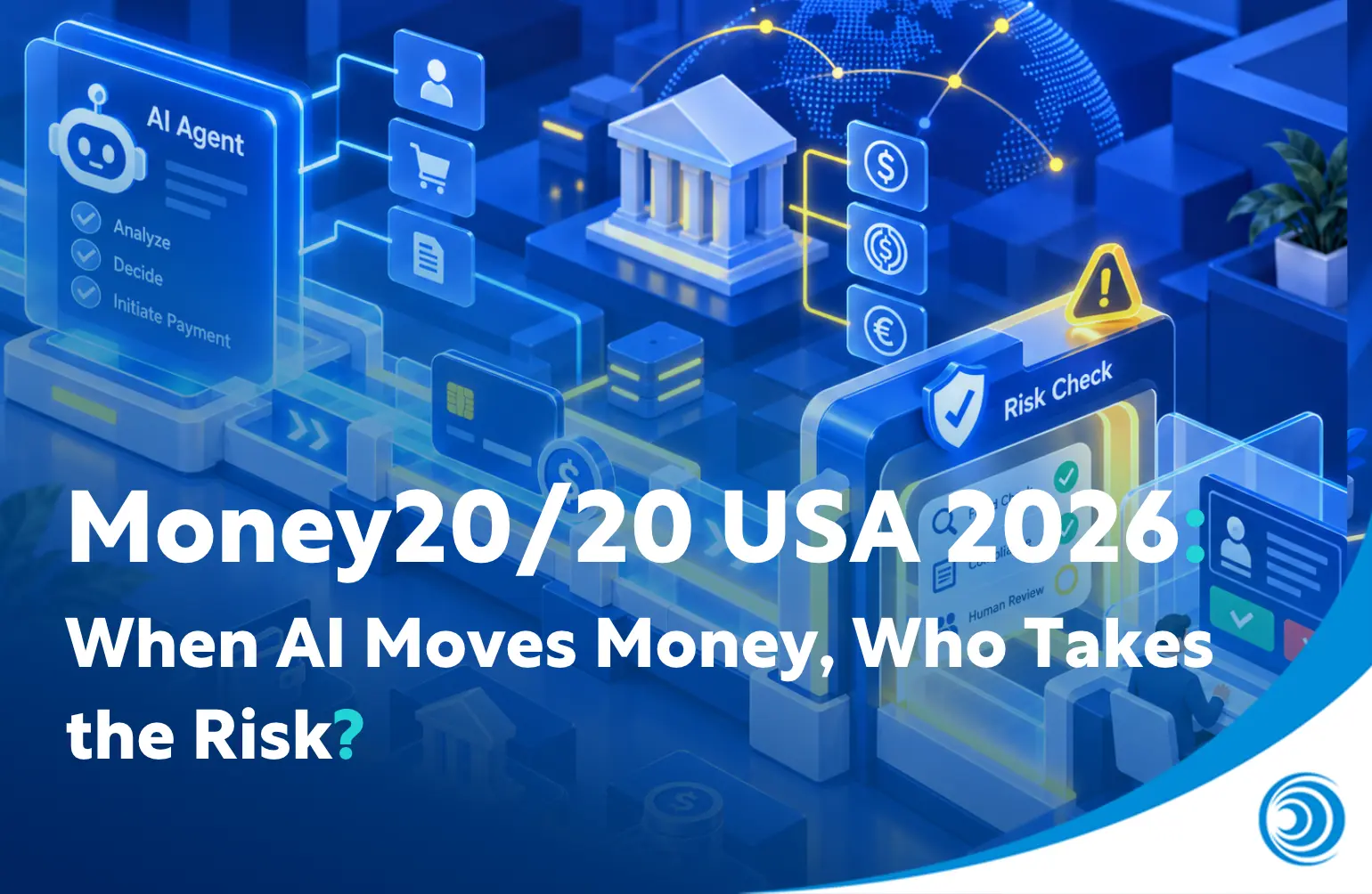

- Money20/20 USA 2026: When AI Moves Money, Who Takes the Risk? - October 26, 2026
- Money20/20 USA 2026: Big Ideas, Breaking News & Four Questions for Fintech - October 14, 2026
- Digital Marketing Mistakes Fintech Startups Make - October 5, 2026
Before Money20/20 USA, we asked four questions about fintech’s next chapter. Could better infrastructure make cross-border finance easier? Who stands to benefit from AI? What makes a partnership work beyond the launch announcement? And how can innovation scale without losing sight of accountability?
With the event now wrapped up, the coverage from Las Vegas suggests these questions are becoming harder to separate. In her pre-event interview with FinTech Magazine, Money20/20 USA’s Executive Vice President, Jessica Blue, described a market moving “from experimentation to execution”.The event coverage suggests a shift towards greater attention to how stablecoins and AI can operate safely and commercially at scale.
That shift brings some awkward questions into focus. What happens when an AI agent purchases on someone’s behalf? Who takes responsibility when a transaction goes wrong? And can stablecoins fulfil their promise if the systems supporting them can’t manage risk effectively?
As The Fintech Times explored in its day-one coverage, the question about who carries the risk when money moves itself is becoming difficult to ignore.
Here’s what our coverage from Money20/20 USA 2026 suggests about where fintech is heading, and what needs to happen before its biggest ideas can deliver.
AI Agents Are Starting to Act. Are Financial Services Ready to Trust Them?
AI has spent plenty of time telling us what to buy, where to invest, and how to manage our money. The shift towards letting it act on our behalf is rather more consequential.
Agentic AI is taking the conversation to systems that can take action on a customer’s behalf, from completing purchases to carrying out tasks within banking services.
That changes the relationship between people and financial institutions. An assistant can suggest a course of action; an agent may actually initiate it. And when money is intrinsically involved, that distinction is important.
In his analysis of AI agents and banking at Money20/20 USA, Alex Jiménez explored how these developments could reshape the banking relationship, particularly around customer control and trust. His coverage also highlighted a boundary raised by PNC CEO William Demchak: “a human will always be involved in banking.” The challenge for financial institutions is working out where that human involvement needs to sit as more tasks become automated.
That starts with a deceptively simple question: how does a business know who – or what – is actually making a transaction?
At the event, discussions around agentic commerce turned to the need to verify an agent’s identity. In The Fintech Times’ day-one report, Adam Davies of Forter outlined the checks merchants need to make when an AI agent arrives at checkout. It needs to be clear who the agent represents, whether it is acting within the authority granted to it, and which payment credentials it is using.
These are practical questions, not distant hypotheticals. Give an agent permission to buy something within a set budget and the boundaries might seem straightforward. But what happens if it interprets an instruction differently from its owner or makes a purchase the customer never intended? The technology might have completed the transaction exactly as it should. The customer could still be left wondering how it happened, and who is responsible for putting it right.
There is also an issue for merchants. Traditional fraud systems have largely been designed around human behaviour, and automated activity can look suspicious even when an agent is acting legitimately. As Forklog’s coverage of the event reported, industry discussions highlighted the need to verify AI agents and establish appropriate limits on what they can do. Without reliable ways to distinguish authorised agents from malicious bots, businesses risk blocking legitimate purchases or letting the wrong ones through.
For banks and payment providers, this creates an opportunity to define the rules before agentic commerce becomes commonplace. Within applicable rules and contractual responsibilities, they can define which tasks agents can perform, how permission is granted and revoked, and how customers are informed when an automated system acts for them.
Jiménez’s analysis suggests these are decisions financial institutions can begin making now, rather than waiting for the technology to mature further.
Agentic AI means that customers could spend less time managing routine transactions. But convenience will only go so far if people feel they’ve lost control of their money. The industry needs to make delegated authority understandable, verifiable, and accountable – because trust in an AI agent ultimately depends on trust in the financial system behind it.
Stablecoins Are Scaling. The Security Has to Keep Pace.
Stablecoins are continuing to be discussed as a way to move money across borders and support business payments. But wider adoption brings one practical challenge for financial institutions. They need to understand the risks associated with transactions before the money moves.
One of the clearest examples from Money20/20 USA came from Mastercard, which announced Stablecoin Security, a risk intelligence solution developed with Borderles.xyz and Keyrails. It is designed to help financial institutions identify fraud, scams, sanctions exposure, and other financial crime risks across the stablecoin payment lifecycle, including before funds move on-chain.
The announcement reflects a wider shift in how the industry is approaching digital assets. As Forklog’s event coverage highlighted, the conversation is moving beyond trading towards practical payment applications, including cross-border transfers and international business payments.
But adoption depends on more than making the technology accessible. Financial institutions need the confidence to use it, businesses need to know where they stand, and the safeguards must work across increasingly complex payment flows.
Stablecoins may help money move differently; making that movement trustworthy is another challenge entirely.
Who Takes Responsibility When Technology Gets It Wrong?
Financial services run on trust, but it gets complicated when a transaction passes through several organisations, platforms, and automated systems. If something goes wrong, customers aren’t interested in debating whose technology failed. They want to know who’s going to fix it.
That question ran through The Fintech Times’ day-two coverage of Money20/20 USA, which examined how risk is becoming an infrastructure issue. Identity checks, transaction monitoring, and authorisation controls all have a role to play, but they need to work together across the payment journey.
For fintechs, banks, and their technology partners, this makes collaboration more than a commercial advantage. If an automated transaction goes wrong, customers need to know who can investigate it, who can resolve the issue, and who is ultimately accountable.
Regulation matters here, too, but compliance alone won’t guarantee a good customer experience. The real test is whether safeguards are built into the product from the start, with clear limits on what systems can do and a reliable way to intervene when something goes wrong.
Building accountability into products early can help innovation scale with greater confidence. But the industry needs to treat trust as part of the infrastructure, not something that’s bolted on after the technology reaches the market.
Big Ideas Need the Right Partners to Go Anywhere
Fintech rarely operates in isolation. Banks bring established customer relationships and financial infrastructure; technology providers bring new capabilities; and regulators help define the boundaries in which it all operates. Getting those pieces to work together is where the real difficulties are.
In Fintech Magazine’s coverage of Money20/20 USA, Jessica Blue explored the relationships between banks, big techs, and regulators, highlighting the importance of collaboration as the industry moves towards commercial deployment.
But a partnership announcement is only the starting point. Integrating systems and aligning compliance requirements can be considerably harder than announcing a deal on stage. As AI agents and stablecoin payments introduce new ways to move money, those details become even more important.
The partnerships that matter won’t necessarily be the ones making the biggest promises. They’ll be the ones that turn new capabilities into services businesses can actually use, with the reliability customers expect.
For fintech marketers, this raises a practical challenge. Explaining what a product can do is only part of the job. Buyers also need to understand its limits, the controls behind it and who they can turn to when something goes wrong. Clear communication about those responsibilities should be part of the proposition from the start.
So, What Does Money20/20 USA Tell Us About Fintech’s Next Chapter?
Before Money20/20 USA, the big questions centred on what fintech could achieve next. The coverage from Las Vegas suggests the conversation is becoming more grounded in what it will take to make those ambitions work.
The next stage will depend on getting the fundamentals right: technology people can trust, safeguards that work in practice, and clear accountability when things don’t go to plan.
These aren’t the most headline-grabbing parts of fintech innovation, but they’re what will determine whether new ideas make it beyond the announcement stage.
For fintech businesses, the challenge is to turn those safeguards into something customers can understand and rely on.
At Blue Train Marketing, we’ll keep following the conversations shaping payments and fintech. Explore our Money20/20 Media Partnership to find out more about how we’re supporting the fintech community.
